
MangaTranslate AI Manga Translator: Translate and Review Manga Images
Ai Image & Video ToolsDescription
MangaTranslate أداة لترجمة نصوص المانجا داخل الصور باستخدام الذكاء الاصطناعي مع إنشاء صور مترجمة قابلة للمراجعة.
Understanding the Service
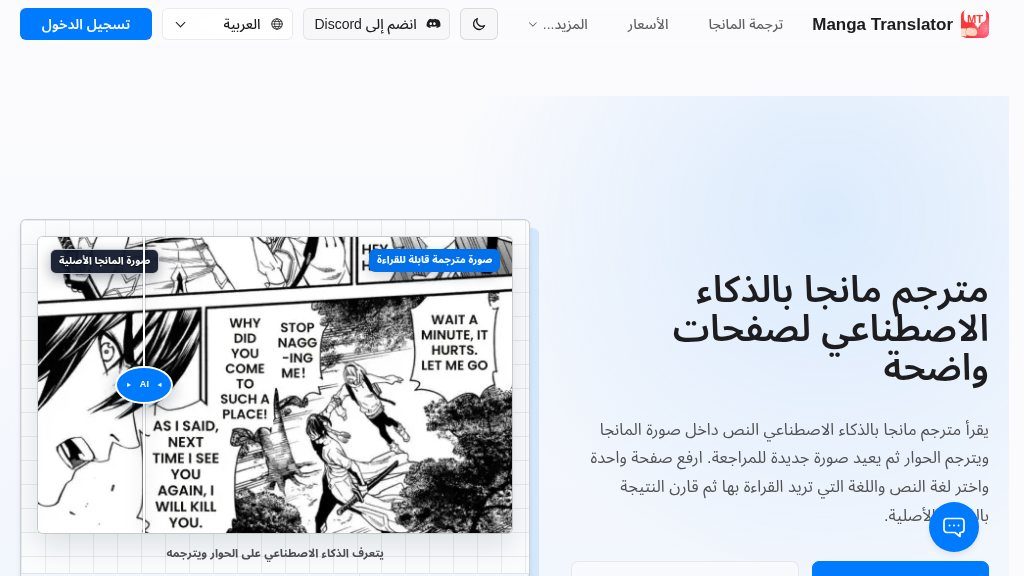
Readers, translators, and manga creators evaluating image-translation tools are usually deciding between a quick readable result and a workflow that still allows human checking. MangaTranslate is designed for the latter: it reads dialogue inside an uploaded manga image, translates the detected text, places the result back onto the page, and returns an image for review and download.
The process is straightforward. Upload a page, select the original and target languages, choose a recognition model, and inspect the translated image alongside the source. The page presents this as a continuous workflow rather than a separate OCR, translation, and image-editing process.
Key Areas to Explore
The tool supports JPG, JPEG, PNG, WEBP, AVIF, PDF, ZIP, TAR, and TAR.GZ uploads, with a stated limit of 15 MB per page. Language selection is broad: source options include major manga languages such as Japanese, Chinese, and Korean, while the target-language list extends to many additional languages.
Three models are shown. Manga is optimized for manga processing and uses different recognition approaches depending on the source language. Ultra uses a higher-quality model and costs two credits per use according to the page, while EagleEye is presented as an early-access model. Selecting the correct source language matters, particularly when using the Manga model.
Typography is another practical control. Automatic font selection is available, alongside styles such as Comic, Clean, Literary, Brush, Classic, and Casual Marker. These options are aimed at matching different scenes, from dense modern dialogue to narration, period drama, action, and handwritten notes.
Strengths
- Combines text recognition, translation, image preparation, and review in one workflow
- Supports a wide range of source and target languages
- Offers multiple recognition models and several manga-oriented font styles
- Lets users compare results, correct text, adjust layout, and download the translated image
Cons
- AI-generated translations and text placement still require page-by-page review
- The stated 15 MB per-page limit and credit-based model choices may affect larger projects
- The available evidence does not clarify turnaround times or broader batch-processing limits
Realistic Use Cases
This service may be useful for readers who want to understand a page in another language without recreating the artwork manually. It can also support translators preparing a rough visual draft, or creators reviewing how translated dialogue fits within speech bubbles and panels. The review step is important: the page states that users can check results, correct text, and adjust layout before downloading.
For larger jobs, visitors should examine how the upload workflow handles their preferred file type and volume. The page mentions email reminders when a single upload contains more than 20 images, but the visible evidence does not establish broader batch-processing behavior or turnaround times.
Who It Is For
Manga readers, localization hobbyists, and image-based translation users are the clearest audience. It is less suitable for anyone expecting an entirely hands-off publishing result, since recognition, translation, lettering, and layout can still require inspection.
What Comes Next
MangaTranslate offers a focused way to turn manga pages into reviewable translated images, with useful controls for languages, models, and lettering style. Its main advantage is the unified image workflow; its main caution is that AI output should be checked page by page, especially where text recognition, tone, or visual placement is sensitive. Visitors should verify accuracy on their own sample pages before relying on it for a complete project.
Embeds
Copy short script widgets for this listing. People often use Textfrog to search for their next personal or work tool. Encourage your community to leave reviews on Textfrog.
Review widget
A clean review badge with stars and review count.
Featured badge
A compact badge for products listed on Textfrog.
Similar Tools
Free online AI image cleaner: remove objects, people, text, and watermarks in yo...
Stop storyboarding. with practical details for online visitors.
Drop your brand, product photos, and website. with practical details for online ...
Create with an AI video maker for text, images, and clips. with practical detail...
Featured Links
Eduify is an online education platform that provides tools and resources for lea...